Just thinking about a rules idea, prompted by Denis McCarthy's examples in the comments in this post on AD&D Chargen.
He mentioned using Feather Fall to carry an entire party down a cliff or other drop. I thought about this - it's the kind of thing you would expect would take coordination. If you're going to jump off a cliff holding onto a wizard, you'd probably want to practice that - the grabbing, the coordination of jumps, the timing of the spell casting, etc. etc. You'd want to put some time and effort into perfecting this potentially dangerous task.
Same with, say, timing a charge through an area with a fireball. You move, the fireball is thrown ahead and explodes, you move right in and hack and slash and slay the wounded fireball victims. Time that a bit wrong and it's not unlike untrained troops trying to charge in just behind a moving wall of artillery fire - they're either going to go in too fast and take fire too or too slow and miss out on the effect.
I just think, if you're going to do this stuff regularly, you'll need practice. It's not a given that if it can be done once, it can be done always just because you thought of it. Or because you're assuming you must be practicing this in your copious spare time between sessions.
At the same time, you get times when the party is backed up against a cliff and the wizard says, "Hey, I can have everyone grab me, we can jump off the cliff together, and 1/3 of the way down I can cast Feather Fall and we'll all land with no damage!" You'd want that to work. It's a crazy cool plan. You'll want that "I throw the fireball just ahead of him" plan that allows the PCs to pull off a coup de main or turn a potential TPK into a victory to work.
But you might have those reservations I have above - if I allow this once, does that means it's now a routine action that always works?
Stealing an idea from Discworld, maybe it only works because it's 1 in a 1,000,000 exactly. Maybe it only works that first time because, against all odds, you coordinate it just right under stress. That stuff happens - I still tell the story of winning a grappling match with a move I didn't know and still can't do well.*
So perhaps a good ruling basis would be, yes, your crazy plan works. Perhaps a roll for avoiding calamity ("Don't roll an 18" or "Don't roll a 1.") Otherwise, it's either "Yes" or "Yes, but" or "Yes, also." After that, though, it's subject to all of the if, ands, or buts of thinking it all through. Yes, you perfectly pulled off that cliff jumping to safety. Next time you try to coordinate five PCs doing the same thing there is a roll involved to see if you do it properly, unless you put in some in-game effort to justify making it routine. Next time you perfectly time that fireball, we'll apply this penalty I realized should have applies and just roll on the scatter chart for a miss and see what happens. And so on - you get the benefit of the doubt on your craziness or "it just might work!" plan, but you can't use that as settled precedent for it working in all cases even if easier than the first case.
I think some people would have trouble adjusting to this - especially if you're used to negotiating out "works now and forever" and not "now, we'll see about later." Yet I think it's got promise. It nicely severs the relationship between the worry about allowing something now and then seeing the consequences later, rewards trying new things (the less precedent against it, the more likely it's going to work this one time), and keeps things moving. In my case I'd be less likely to worry that I've just allowed a game-breaking change. Or that I'd turned a ruling meant to keep things moving and reward your cleverness into the basis of all action going forward. "We do the Feather Fall thing over and over until the entire army is down the cliff."
I like the idea of making this a standing, known goal when making rulings - I'm probably going to say yes, but it's likely that it's not precedent. I'm saying you try the cool thing that should probably take a lot of time, effort, learning, practice, etc. and everything just worked out this time under stress. If you want to repeat it, and it seems like it should be harder than it was, that's something we've agreed to. Instead of just saying "No!" because I'm concerned about where it would lead I could say "Yes!" because I know it doesn't have to lead anywhere. It might be precedent, it might just be a one-off set of accidentally perfect circumstances and execution.
* My coach talked me through it in real time, against an opponent who could hear his words as well as I could. Imagine his chagrin when I couldn't pull it off even once properly in practice after that.
Monday, April 10, 2017


Sunday, April 9, 2017
When is the next Felltower session?
As I've mentioned before, scheduling has killed us for gaming this year so far.
Looking ahead, we've got two game sessions on tap before the next Felltower:
- 20th Homeland / Gamma Terra (GURPS), as we try to go and see what they grow up at the Robot Farm and (hopefully) make friends with whoever is up there.
- Part II of White Plume Mountain (AD&D), as additional PCs roll in after the 60%+ casualties inflicted by their weakened state the terrors of Keraptis's dungeon.
Only after those two will we have time for Felltower.
This probably means a session in May sometimes for Felltower.
In the dungeon this means some restocking and reinforcing, naturally, but not a whole lot - I did those passes already recently and the place is ready to play. It does possibly mean some of the alertness that was sparked by the PCs has receded. Who really can keep their attention up, or alertness up, when the intruders haven't returned in a couple of months?
Permanent changes have been made of course. Destroyed doors generally stay destroyed, traps that were set in response to PC actions stay there unless triggered (there is always a chance something else blundered into them), dead monsters generally stay dead. Regular conditions will come up - the orcs keep blocking tunnels and will probably keep blocking tunnels, even if only because of circular actions by themselves and the PCs.*
The dungeon is therefore mostly ready to go. I'll need to do one pass over it and see what could/should/might have changed and dice and decide for that. I'll need to print out an updated roster for foes.
And then I'll just wait for the next time we can play. And see what I can do about clearing out my Sundays better in the future!
* The orcs block the tunnels to keep out the PCs. The PCs dig out the tunnels to get at the dungeon parts they want to explore and kill the orcs for blocking the tunnels. Therefore, logically, the orcs realize they need more and better blocking to keep out those murderous adventurers who keep killing them. That just makes the PCs angrier. Repeat, repeatedly.
Looking ahead, we've got two game sessions on tap before the next Felltower:
- 20th Homeland / Gamma Terra (GURPS), as we try to go and see what they grow up at the Robot Farm and (hopefully) make friends with whoever is up there.
- Part II of White Plume Mountain (AD&D), as additional PCs roll in after the 60%+ casualties inflicted by their weakened state the terrors of Keraptis's dungeon.
Only after those two will we have time for Felltower.
This probably means a session in May sometimes for Felltower.
In the dungeon this means some restocking and reinforcing, naturally, but not a whole lot - I did those passes already recently and the place is ready to play. It does possibly mean some of the alertness that was sparked by the PCs has receded. Who really can keep their attention up, or alertness up, when the intruders haven't returned in a couple of months?
Permanent changes have been made of course. Destroyed doors generally stay destroyed, traps that were set in response to PC actions stay there unless triggered (there is always a chance something else blundered into them), dead monsters generally stay dead. Regular conditions will come up - the orcs keep blocking tunnels and will probably keep blocking tunnels, even if only because of circular actions by themselves and the PCs.*
The dungeon is therefore mostly ready to go. I'll need to do one pass over it and see what could/should/might have changed and dice and decide for that. I'll need to print out an updated roster for foes.
And then I'll just wait for the next time we can play. And see what I can do about clearing out my Sundays better in the future!
* The orcs block the tunnels to keep out the PCs. The PCs dig out the tunnels to get at the dungeon parts they want to explore and kill the orcs for blocking the tunnels. Therefore, logically, the orcs realize they need more and better blocking to keep out those murderous adventurers who keep killing them. That just makes the PCs angrier. Repeat, repeatedly.
Saturday, April 8, 2017
Whose game is it, GM or Players? Both.
For a while I've been meaning to sit down and post one of the lessons I've learned from gaming as long as I have.
The Christopher Rice went and encapsulated that lessons in his latest Gamemaster's Guidepost article.
It's basically this: it's not the GM's game. It's not the players' game. It's the GM's and the players' game.
We tend to discuss campaigns as if they belong to the GM. Peter's game. Chris's game. Gary's game. That guy at the hobby shop's game.
But you'll get people who say, no, it's not the GM's game. It's the players' game. If you as the GM think it's your game, you're doing something wrong.
But honestly, it's everyone's game. The GM has to enjoy running it enough to put in all of the effort needed for a good game. The players need to enjoy it enough to keep showing up and put in the effort to make it fun for themselves and others. If either is lacking the joy of their part of the enterprise, it's going to end sooner or (perhaps rather than) later.
Once I really got this lesson deep down, my gaming became better overall. We all have different roles around the table, but it's meant for the enjoyment of everyone. If you put the players' enjoyment ahead of the GMs, or the GM's enjoyment ahead of that of the players, I think you're headed down the "end sooner rather than later" road.
And that's it. It's everyone's game.
The Christopher Rice went and encapsulated that lessons in his latest Gamemaster's Guidepost article.
It's basically this: it's not the GM's game. It's not the players' game. It's the GM's and the players' game.
We tend to discuss campaigns as if they belong to the GM. Peter's game. Chris's game. Gary's game. That guy at the hobby shop's game.
But you'll get people who say, no, it's not the GM's game. It's the players' game. If you as the GM think it's your game, you're doing something wrong.
But honestly, it's everyone's game. The GM has to enjoy running it enough to put in all of the effort needed for a good game. The players need to enjoy it enough to keep showing up and put in the effort to make it fun for themselves and others. If either is lacking the joy of their part of the enterprise, it's going to end sooner or (perhaps rather than) later.
Once I really got this lesson deep down, my gaming became better overall. We all have different roles around the table, but it's meant for the enjoyment of everyone. If you put the players' enjoyment ahead of the GMs, or the GM's enjoyment ahead of that of the players, I think you're headed down the "end sooner rather than later" road.
And that's it. It's everyone's game.
Friday, April 7, 2017
AD&D White Plume Mountain Initiative
Running White Plume Mountain, I ran into the issue of the rather complex AD&D initiative system.
I'd downloaded documents like the ADDICT PDF and a by-the-book flowchart for initiative. It's complex. I didn't need complex. It has features that aren't always helpful but can be decisive in very specific situations (weapon length, weapon speed factors.) It has stuff spread all over a number of pages.
I wanted a pretty simple system, but one that didn't depend on arbitrary rules ("Missile Fire Phase" or "No Spells after Melee Begins" or such as that). I also really do like segments as a concept. My favorite initiative system for Rolemaster assigned points to activities and you'd use them to line up who did what, when. Ironically that system didn't go far enough - it had the basis of an overlapping phased system that would like like an overall-round-free version of Champions 1st edition. But it had the effect that not all things took the same time, and starting a long action too soon before someone took a short, opposing action could mean they got to you first.
In any case, I looked at OSRIC and decided it had something to recommend it, but needed tweaking. Here is what I ended up using:
First Round Only:
0) Determine Surprise. Roll 1d for your own side. If the result is a 1, the group is surprised for one segment. If the result is a 2, the group is surprised for two segments. If the result is a 3-6, the group is not surprised. [Segments count as a full round during surprise for melee attacks, but count as normal segments for missile fire or spells, Dexterity Adjustments reduce surprise segments 1:1]
All Rounds:
1) Declare Spells and Actions (For example, cast Fireball, attack in melee, flee, etc.)
2) Determine Initiative (Each side rolls 1d for the other side’s initiative. Each party acts in the segment indicated by the other side’s roll.)
3) Party with Lower Segment Roll Goes (Resolve PC actions clockwise around the table, results take effect immediately. Side without initiative can get specific reactions – hitting fleeing characters, receiving a charge with spears, etc. Spells take effect on the segment indicated by the casting time, even if that’s after the other side. If it’s the same time, flip a coin to see if you get the spell off before anyone attacks you.)
4) Party with Higher Segment Roll Goes (As #3, but for the side with lower segment roll)
Repeat until the battle is over.
Note: Spells are automatically spoiled by a hit during casting. Spoiled spells are used up just as if the spell was successfully cast.
Note: Unlike AD&D, we will not split multiple attacks up into before-and-after initiative attacks. Especially for 3/2, this means every other round we need to remember a second attack AFTER everyone has gone. Instead we’ll treat it as one action.
Then I just set times to do anything - pretty much, 1 segment for any given action. Swap weapons? 1 Segment. Put away your shield and mace, and take out your staff and attack? 3 segments (Put away shield, put away mace, ready and attack with staff). So if your initiative was 4, you'd actually get to go on 7.
Notes
In actual play, though, I ended up rolling surprise for the other side. I still don't love 1 = 1, 2 = 2, 3+ = 0 but it's simple. Reaction adjustments can negate (or prolong) surprise, but since we're rolling by sides for initiative they don't affect which segment you go on.
Declaring actions ahead of time is something we've done in other games, so it wasn't a new concept to the players. It worked very well - people didn't spend a lot of time trying to decide their best option for right now, because they didn't know what the situation will clearly be when they actually get to go. Maybe the bad guys will be killed by people before them in the order. Maybe the bad guys will force their hand by fleeing or using spell-like powers. You just choose what you hope to do and then we resolve it as your turn comes up. It certainly pushes the pace nicely and encourages finding and memorizing 1 segment spells you can use during combat.
In retrospect, you don't need to set this up with rolling the other side's initiative number. You could simply roll your own side's, and hope for a low roll. It wouldn't materially change things except you'd be excited by a 1 and disappointed with a 6, not the other way around. I may change this for next session and say, roll your own
I'd downloaded documents like the ADDICT PDF and a by-the-book flowchart for initiative. It's complex. I didn't need complex. It has features that aren't always helpful but can be decisive in very specific situations (weapon length, weapon speed factors.) It has stuff spread all over a number of pages.
I wanted a pretty simple system, but one that didn't depend on arbitrary rules ("Missile Fire Phase" or "No Spells after Melee Begins" or such as that). I also really do like segments as a concept. My favorite initiative system for Rolemaster assigned points to activities and you'd use them to line up who did what, when. Ironically that system didn't go far enough - it had the basis of an overlapping phased system that would like like an overall-round-free version of Champions 1st edition. But it had the effect that not all things took the same time, and starting a long action too soon before someone took a short, opposing action could mean they got to you first.
In any case, I looked at OSRIC and decided it had something to recommend it, but needed tweaking. Here is what I ended up using:
First Round Only:
0) Determine Surprise. Roll 1d for your own side. If the result is a 1, the group is surprised for one segment. If the result is a 2, the group is surprised for two segments. If the result is a 3-6, the group is not surprised. [Segments count as a full round during surprise for melee attacks, but count as normal segments for missile fire or spells, Dexterity Adjustments reduce surprise segments 1:1]
All Rounds:
1) Declare Spells and Actions (For example, cast Fireball, attack in melee, flee, etc.)
2) Determine Initiative (Each side rolls 1d for the other side’s initiative. Each party acts in the segment indicated by the other side’s roll.)
3) Party with Lower Segment Roll Goes (Resolve PC actions clockwise around the table, results take effect immediately. Side without initiative can get specific reactions – hitting fleeing characters, receiving a charge with spears, etc. Spells take effect on the segment indicated by the casting time, even if that’s after the other side. If it’s the same time, flip a coin to see if you get the spell off before anyone attacks you.)
4) Party with Higher Segment Roll Goes (As #3, but for the side with lower segment roll)
Repeat until the battle is over.
Note: Spells are automatically spoiled by a hit during casting. Spoiled spells are used up just as if the spell was successfully cast.
Note: Unlike AD&D, we will not split multiple attacks up into before-and-after initiative attacks. Especially for 3/2, this means every other round we need to remember a second attack AFTER everyone has gone. Instead we’ll treat it as one action.
Then I just set times to do anything - pretty much, 1 segment for any given action. Swap weapons? 1 Segment. Put away your shield and mace, and take out your staff and attack? 3 segments (Put away shield, put away mace, ready and attack with staff). So if your initiative was 4, you'd actually get to go on 7.
Notes
In actual play, though, I ended up rolling surprise for the other side. I still don't love 1 = 1, 2 = 2, 3+ = 0 but it's simple. Reaction adjustments can negate (or prolong) surprise, but since we're rolling by sides for initiative they don't affect which segment you go on.
Declaring actions ahead of time is something we've done in other games, so it wasn't a new concept to the players. It worked very well - people didn't spend a lot of time trying to decide their best option for right now, because they didn't know what the situation will clearly be when they actually get to go. Maybe the bad guys will be killed by people before them in the order. Maybe the bad guys will force their hand by fleeing or using spell-like powers. You just choose what you hope to do and then we resolve it as your turn comes up. It certainly pushes the pace nicely and encourages finding and memorizing 1 segment spells you can use during combat.
In retrospect, you don't need to set this up with rolling the other side's initiative number. You could simply roll your own side's, and hope for a low roll. It wouldn't materially change things except you'd be excited by a 1 and disappointed with a 6, not the other way around. I may change this for next session and say, roll your own
Thursday, April 6, 2017
Gaming in the Classroom underway
So at long last I'm getting to use RPGs in the classroom again.
I have a solo young student who particularly needs speaking practice, yet has a solidly high level of English. So I've introduced him to RPGs. It's kind of the perfect tool for the job - his challenge is finding the English words to express what he's trying to express. Give him a paper man, and have try to solve the paper man's problems with his words and some dice.
So I made up a character using GURPS Lite.
The system is simple enough - roll low to accomplish things, roll high for effect. Four stats. Four secondary characteristics. A few skills. A way to roll for skills you don't know.
His guy is a warrior in a generic TL3 world which may or may not be the same one with Felltower on it.
We didn't have a lot of time. I made three mistakes:
- I forgot to do any prep until right before class. I remembered to bring my stuff, but I really did need a little more prep. I'm not sure he noticed but it would have been more smooth if I had more than just a character and a rough idea.
- I should have just started off playing with less explanation.
- I gave him his character sheet all at once instead of revealing stats and elements as needed.
I decided I'd make it a fantasy game, start him off as a prisoner (make him focus on what to do, not what he has) and let him escape from a simple area. Once that's done,
The situation was that he's a warrior-scout who wants to be a great and famous warrior, and he and some other men were scouting the borderlands where the orcs live. They were attacked and he was knocked out. When he came to, he was a prisoner in a 10 x 10' cell and shackled to the floor, and an orc told him he'd be back later. We started there.
(I started him as a prisoner as I figured he'd be less likely to play "find the thing to roll against" given that he had nothing to try and use. I was right.)
He quickly searched around, making a Search roll, and examined the shackle. He found the shackle was meant for his ankle but they'd clamped it around his wrist. He said he wanted to try and work it free. A default Escape roll taught him about trying things you don't know how to do, he made it, and he got free.
(I had decided on these details as I described the room. I was pleased with how quickly he went from "What on this sheet is the answer?" to "Check everything around me and try stuff that makes logical sense." And how well he expressed the idea in English, which is the entire point of the exercise.)
He moved to the bar-windowed wooden door and decided to kick it open. I pointed out that he could do this but it would be noisy - still okay?
No! He decided to listen at the door, and quietly check if it was locked. He heard nothing, and it was locked . . . but peering through the keyhole he could see a snoozing orc guard with the keys on a stool just across from the hall.
That's where we ended. He's got a couple weeks to think it over, and I told him we'd spend 10-15 minutes on this each class if he's finished his other work. Given that he's an enthusiastic and hard worker, that should be no issue.
I figure I'll let him escape from the (small) orc-held fortress and then let him go on adventures with some hired help or recruited soldiers at his side. Maybe I'll use S1 In Search of the Unknown*, or a modified Caravan of Ein Arras, or just make up my own small dungeon or outdoor area to explore.
Oh, and because I get lost in GMing just like players get lost in gaming, I ended up running a bit long. It was like, "What do you do? Oh, wait, think it over until next time, class ended a while ago." Next time I'll keep it tighter. Fun, though, and it's a place and student for whom I think gaming is really ideal.
I briefly considered S&WL or even D&D5, but I decided those would take more explanation than GURPS Lite does given pregenerated characters. Besides, I could run it with no books, no lookups, no nothing - and it's about speaking practice more than gaming. The fragile lethality of S&WL and the complexity of character details of D&D5 seemed like they could get in the way of him getting the speaking practice I want.
Fun, and we'll see how it goes. You may see more updates on this as long as I can easily file off the details enough to avoid any privacy issues.
* Speaking of which, what the heck edition is that for? My two copies, 1st and 2nd edition, are for Basic Set. Yet both feature a Dwarf (race-as-class) with 18/54 Strength, which is an AD&D or OD&D Greyhawk feature (where Dwarf is a race but not a class.) What the?
I have a solo young student who particularly needs speaking practice, yet has a solidly high level of English. So I've introduced him to RPGs. It's kind of the perfect tool for the job - his challenge is finding the English words to express what he's trying to express. Give him a paper man, and have try to solve the paper man's problems with his words and some dice.
So I made up a character using GURPS Lite.
The system is simple enough - roll low to accomplish things, roll high for effect. Four stats. Four secondary characteristics. A few skills. A way to roll for skills you don't know.
His guy is a warrior in a generic TL3 world which may or may not be the same one with Felltower on it.
We didn't have a lot of time. I made three mistakes:
- I forgot to do any prep until right before class. I remembered to bring my stuff, but I really did need a little more prep. I'm not sure he noticed but it would have been more smooth if I had more than just a character and a rough idea.
- I should have just started off playing with less explanation.
- I gave him his character sheet all at once instead of revealing stats and elements as needed.
I decided I'd make it a fantasy game, start him off as a prisoner (make him focus on what to do, not what he has) and let him escape from a simple area. Once that's done,
The situation was that he's a warrior-scout who wants to be a great and famous warrior, and he and some other men were scouting the borderlands where the orcs live. They were attacked and he was knocked out. When he came to, he was a prisoner in a 10 x 10' cell and shackled to the floor, and an orc told him he'd be back later. We started there.
(I started him as a prisoner as I figured he'd be less likely to play "find the thing to roll against" given that he had nothing to try and use. I was right.)
He quickly searched around, making a Search roll, and examined the shackle. He found the shackle was meant for his ankle but they'd clamped it around his wrist. He said he wanted to try and work it free. A default Escape roll taught him about trying things you don't know how to do, he made it, and he got free.
(I had decided on these details as I described the room. I was pleased with how quickly he went from "What on this sheet is the answer?" to "Check everything around me and try stuff that makes logical sense." And how well he expressed the idea in English, which is the entire point of the exercise.)
He moved to the bar-windowed wooden door and decided to kick it open. I pointed out that he could do this but it would be noisy - still okay?
No! He decided to listen at the door, and quietly check if it was locked. He heard nothing, and it was locked . . . but peering through the keyhole he could see a snoozing orc guard with the keys on a stool just across from the hall.
That's where we ended. He's got a couple weeks to think it over, and I told him we'd spend 10-15 minutes on this each class if he's finished his other work. Given that he's an enthusiastic and hard worker, that should be no issue.
I figure I'll let him escape from the (small) orc-held fortress and then let him go on adventures with some hired help or recruited soldiers at his side. Maybe I'll use S1 In Search of the Unknown*, or a modified Caravan of Ein Arras, or just make up my own small dungeon or outdoor area to explore.
Oh, and because I get lost in GMing just like players get lost in gaming, I ended up running a bit long. It was like, "What do you do? Oh, wait, think it over until next time, class ended a while ago." Next time I'll keep it tighter. Fun, though, and it's a place and student for whom I think gaming is really ideal.
I briefly considered S&WL or even D&D5, but I decided those would take more explanation than GURPS Lite does given pregenerated characters. Besides, I could run it with no books, no lookups, no nothing - and it's about speaking practice more than gaming. The fragile lethality of S&WL and the complexity of character details of D&D5 seemed like they could get in the way of him getting the speaking practice I want.
Fun, and we'll see how it goes. You may see more updates on this as long as I can easily file off the details enough to avoid any privacy issues.
* Speaking of which, what the heck edition is that for? My two copies, 1st and 2nd edition, are for Basic Set. Yet both feature a Dwarf (race-as-class) with 18/54 Strength, which is an AD&D or OD&D Greyhawk feature (where Dwarf is a race but not a class.) What the?
Wednesday, April 5, 2017
Mail Call: DCC & Yawning Portal
These two books came in the mail yesterday:

I'd been meaning to get a reference copy of DCC for a while, and I found an inexpensive softcover version. It's still got all I like (crazy magic, amusing setting, interesting mechanics to read up on) and what I don't (contradictory statements, no treasure system.) I'd forgotten just how big it is. It takes up nearly as much space as two D&D 5th edition books and it's the same size across as the GURPS Basic Set hardbacks! Good stuff, though, and it deserves a spot on the shelf if only for its unique twist as a retro-derived system.
Yawming Portal is a fun read so far. Yes, I read White Plume Mountain first. It's a well-done conversion as far as I can tell. And of course Blackrazor, Whelm, and Wave are three of the four example sentient weapons in the 5th edition DMG. Heh.
I'm looking forward to reading the other ways, and it makes me very curious about the Dungeons of Dread version of WPM and the original versions of the other adventures I'm less familiar with. And I think I already see some stuff I can use in my GURPS DF game. Hurrah!
I'd been meaning to get a reference copy of DCC for a while, and I found an inexpensive softcover version. It's still got all I like (crazy magic, amusing setting, interesting mechanics to read up on) and what I don't (contradictory statements, no treasure system.) I'd forgotten just how big it is. It takes up nearly as much space as two D&D 5th edition books and it's the same size across as the GURPS Basic Set hardbacks! Good stuff, though, and it deserves a spot on the shelf if only for its unique twist as a retro-derived system.
Yawming Portal is a fun read so far. Yes, I read White Plume Mountain first. It's a well-done conversion as far as I can tell. And of course Blackrazor, Whelm, and Wave are three of the four example sentient weapons in the 5th edition DMG. Heh.
I'm looking forward to reading the other ways, and it makes me very curious about the Dungeons of Dread version of WPM and the original versions of the other adventures I'm less familiar with. And I think I already see some stuff I can use in my GURPS DF game. Hurrah!
Tuesday, April 4, 2017
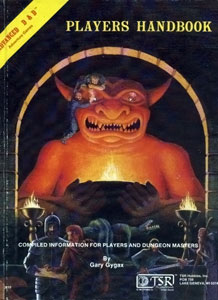
AD&D Character Generation for White Plume Mountain
Here is how we generated our mid-level AD&D guys for White Plume Mountain.
What levels?
First things first, I needed to know what level people would need to be at.
WPM says it is for levels 5-10 on the cover. Inside, it's more specific:
"at the very least four and at most ten characters, with a combined total of 40 to 60 levels between them. A good party balance would be something like 40% fighters, 30% magic-users, 20% clerics and 10% thieves."
- WPM, p. 2
So I sat down and said, okay, what's the middle range of XP in that? Probably around 80K.
Then just to be sure, and just for the fun of it, I actually calculated the xp that would generate fighters, magic-users, clerics, and thieves at 5th and 10th levels, plugged them into a spreadsheet and weighted it by those 40/30/20/10 numbers.
In the end this came out in the 75,000-80,000 XP range. Heh. Eyeballing was good enough . I tried a few PCs and found that 80,000 would put some PCs right on the "I need 1 xp more" edge of a level, and with triple-classed demi-humans it would be a mess. So I went with 75K, after checking to make sure I wasn't causing any problems, and I said this to my players:
"Roll 4d, drop lowest, six times. Arrange in any order.
Do that for six sets.
Pick one.
You get 75,000 xp (so 37,500 each for 2 classes, 25,000 for 3 classes), yes you can get your Prime Requisite bonus as appropriate
HP are max at first level, then roll."
We actually ended up doing this for most of the group before a session of Felltower, as each person came in and wanted to try a "test set" of rolls. Why test? Just roll and write. We did most of the chargen in a relatively short amount of time, although it did eat into our game session a little.
I did end up modifying the instructions a little:
- no characters with two classes. It's just a big headache, for one, and then I'd need to allow people to hairsplit XP a bit to avoid a dual-classed PC who didn't have access to the first class's abilities yet.
- no Assassins, no evil characters, if only because we knew we'd have a paladin (and we did, although he had to miss the session) and we had another player who'd pretty much said he'd be a LG cleric or a paladin.
- I did say I'd allow a bard, but you'd have to three-way split the XP to do it - no using just enough for your fighter level, just enough for thief, rest in Bard. It's doable, though.
Otherwise, that put people between 6th level and 8th level, which multi-class characters generally one level behind (two classes) or two (three classes). That seemed about right given that we had between six and ten people who wanted to play. If everyone could make it, centered on 7th level would be fine, and if only six did, we'd still be closer to the top end, and I figured that was a slight handicap since they hadn't played AD&D in a long time (some never had) and the extra HP and spells would help buffer against the difficulty.
Gear
Gear was a different issue.
I said, unlimited mundane gear. Take as much as you want. However, only gear in the PHB. No "there are silver daggers, can all of my weapons be silver?" No, silver daggers, silver arrows. Otherwise, help yourself. By this level, you should have more money than you know how to spend on adventuring.
For magic items, I turned to Appendix P in the DMG on page 225-227. I had though of handing out a budget and a theoretical amount of money - like in C2 The Ghost Tower of Inverness. But I decided that would take a lot of time and debate, get switched last minute as people rationalized a different choice as better, and might make for very lopsided decisions. Random was better, in my thinking. I almost picked a selection based on tournament PCs from similar level modules (which pretty much means the other S-series modules) but again, random seemed more fun. "I got plate +1 and a shield +1!" beats, "Okay, we should give the fighters all plate +1, and save this shield +1 for the druid because he's our backup healer and needs a better AC, and . . . "
So Appendix P. We calculated the percentages and rolled.
Let me tell you, it's hard to get a well-equipped party that way. We had an 8th level druid with three different +1 weapons and a 7th level fighter with nothing but a single +1 shield. The percentages seem high, but they really are not, and you can't even have a chance of a +2 item until you're above name level for most classes (except Rangers with chain armor and magic-users with magical daggers.) Druids get a lot of chances for different sorts of magic weapons and fighters get one chance at one. You can't even technically get a broadsword, two-handed sword, or bastard sword as a magic weapon because that's not listed.
What we did was honor those * and ** entries, but ignore the qualifies on sword types except for class restrictions.
I also assumed that the scroll % chances were rolled for each type of scroll based on the footnote about thieves. We further assumed that you'd get a number of potion rolls equal to the maximum number of potions.
I allowed PCs to pick the kind of scroll of protection they got, or any spells (although we rolled for levels.)
And then in the end, I gave the group some items and upgrades, specifically:
" 2 potions of healing (2d4+2)
- 1 potion of extra-healing (3d8+3)
- a single +2 weapon for one of your characters*
- an upgrade of any of your current magical weapons from +1 to +2**
- Bag of Holding (500 pound capacity)
- One each of Cloak and Boots of Elvenkind
- Wand of Negation (20 charges)
- Necklace of Adaptation
* Pick any one person.
** Pick someone who has a +1 weapon, make it +2 OR if you've got a cleric with a +1 weapon you can upgrade the cleric to a Staff of Striking (20 charges) instead of his +1 weapon.
Divide them up as you see fit."
When we got down to 5 players, I threw in an extra each of healing, extra-healing, and one chosen or randomly-rolled potion from the chart on DMG p. 227, and said that instead of a swap the cleric could just have a Staff of Striking in addition to anything he had.
Amusingly that Bag of Holding weighs 15 pounds empty. Geez. Who needs Detect Magic? "I grab that empty sack! Oof!" Plenty of "hand this to people, don't throw it to them" jokes abounded.
How was it?
I mentioned some above but:
- we ended up with about half the party in magical plate mail, and half the party in mundane armor.
- Urf Nightsoil ended up with Bracers of AC 6 and a Ring of Protection +2, giving him AC 2 with his Dex adjustment.
- two fighters ended up with 15 bolts +2. I love how there are no magic arrows on the list.
- I had to provide those +2 weapons because some monsters in AD&D need +2 weapons to hit, plus these guys are level 6-8, someone would have a +2 weapon by then.
- I needed to provide miscellaneous items by choice to avoid getting things too good (Wings of Flying, say, or a Rope of Climbing) or too useless in the adventure (enjoy this Wand of Wonder).
I picked items that seemed useful in the context of the adventure but weren't too tailored to it, and were likely pickups from the kind of things I'd hand out back in the day (or would hand out now.) The Wings of Flying and Rope of Climbing were specifically not on my list. Although the latter is fairly common, my players agreed after the session that had they had one everything would have been "How do we use the Rope of Climbing here to get around this?" or "Just use the Rope of Climbing!" instead of "How do we get past this obstacle?"
Replacement Characters
So last session, three characters were turned to frosted corpses and need replacement. The players have their six sets of rolls, and used one set - I told them to simply get the next set they want to use and use that to make their PC. XP will be the same, simply because it's easier to use what's gone before and because the adventure is going to be hard enough without being lower level.
Magic items would be rolled as before, even given the oddness that results, and I will probably give the new group one or two healing potions on top of that. Probably. We'll see.
If I could do it again . . .
I'd do chargen the same. It worked great. It was fun to do, it gave reasonable characters without either too high or two low scores, and made "roll then choose" compatible with "but I really want to run a _____." On top of that, you weren't assured of at least one 18 (I think no one had multiple 18s) and at least one player picked a stat set that lacked an 18 because they needed more prereqs for a given class.
Appendix P isn't so great, though. It gives you a potentially lavishly equipped (with +1 weapons) guy but until name level you aren't really getting anything impressive. Plus, you can get odd results and some of the reasoning isn't clear. I'm only using it again for replacement guys because everyone's characters will be on the same system.
Next time, I'd probably use the magic item tables for NPC parties on pg. 176. I'd probably roll percentage for each one - so a 6th level guy gets three 60% rolls for table I and two 40% rolls on table II. What you can get for gear there is more random, but also potentially more useful. I'd allow certain swaps (so a magic-user rolling Splint +4 on Table II could choose the Bracers of AC 4 instead) but otherwise, that might be good. Plus you can get some sweet stuff no sane GM would just hand to you but which probably would be fine in play anyway.
And that's how we ended up with our AD&D party.
What levels?
First things first, I needed to know what level people would need to be at.
WPM says it is for levels 5-10 on the cover. Inside, it's more specific:
"at the very least four and at most ten characters, with a combined total of 40 to 60 levels between them. A good party balance would be something like 40% fighters, 30% magic-users, 20% clerics and 10% thieves."
- WPM, p. 2
So I sat down and said, okay, what's the middle range of XP in that? Probably around 80K.
Then just to be sure, and just for the fun of it, I actually calculated the xp that would generate fighters, magic-users, clerics, and thieves at 5th and 10th levels, plugged them into a spreadsheet and weighted it by those 40/30/20/10 numbers.
In the end this came out in the 75,000-80,000 XP range. Heh. Eyeballing was good enough . I tried a few PCs and found that 80,000 would put some PCs right on the "I need 1 xp more" edge of a level, and with triple-classed demi-humans it would be a mess. So I went with 75K, after checking to make sure I wasn't causing any problems, and I said this to my players:
"Roll 4d, drop lowest, six times. Arrange in any order.
Do that for six sets.
Pick one.
You get 75,000 xp (so 37,500 each for 2 classes, 25,000 for 3 classes), yes you can get your Prime Requisite bonus as appropriate
HP are max at first level, then roll."
We actually ended up doing this for most of the group before a session of Felltower, as each person came in and wanted to try a "test set" of rolls. Why test? Just roll and write. We did most of the chargen in a relatively short amount of time, although it did eat into our game session a little.
I did end up modifying the instructions a little:
- no characters with two classes. It's just a big headache, for one, and then I'd need to allow people to hairsplit XP a bit to avoid a dual-classed PC who didn't have access to the first class's abilities yet.
- no Assassins, no evil characters, if only because we knew we'd have a paladin (and we did, although he had to miss the session) and we had another player who'd pretty much said he'd be a LG cleric or a paladin.
- I did say I'd allow a bard, but you'd have to three-way split the XP to do it - no using just enough for your fighter level, just enough for thief, rest in Bard. It's doable, though.
Otherwise, that put people between 6th level and 8th level, which multi-class characters generally one level behind (two classes) or two (three classes). That seemed about right given that we had between six and ten people who wanted to play. If everyone could make it, centered on 7th level would be fine, and if only six did, we'd still be closer to the top end, and I figured that was a slight handicap since they hadn't played AD&D in a long time (some never had) and the extra HP and spells would help buffer against the difficulty.
Gear
Gear was a different issue.
I said, unlimited mundane gear. Take as much as you want. However, only gear in the PHB. No "there are silver daggers, can all of my weapons be silver?" No, silver daggers, silver arrows. Otherwise, help yourself. By this level, you should have more money than you know how to spend on adventuring.
For magic items, I turned to Appendix P in the DMG on page 225-227. I had though of handing out a budget and a theoretical amount of money - like in C2 The Ghost Tower of Inverness. But I decided that would take a lot of time and debate, get switched last minute as people rationalized a different choice as better, and might make for very lopsided decisions. Random was better, in my thinking. I almost picked a selection based on tournament PCs from similar level modules (which pretty much means the other S-series modules) but again, random seemed more fun. "I got plate +1 and a shield +1!" beats, "Okay, we should give the fighters all plate +1, and save this shield +1 for the druid because he's our backup healer and needs a better AC, and . . . "
So Appendix P. We calculated the percentages and rolled.
Let me tell you, it's hard to get a well-equipped party that way. We had an 8th level druid with three different +1 weapons and a 7th level fighter with nothing but a single +1 shield. The percentages seem high, but they really are not, and you can't even have a chance of a +2 item until you're above name level for most classes (except Rangers with chain armor and magic-users with magical daggers.) Druids get a lot of chances for different sorts of magic weapons and fighters get one chance at one. You can't even technically get a broadsword, two-handed sword, or bastard sword as a magic weapon because that's not listed.
What we did was honor those * and ** entries, but ignore the qualifies on sword types except for class restrictions.
I also assumed that the scroll % chances were rolled for each type of scroll based on the footnote about thieves. We further assumed that you'd get a number of potion rolls equal to the maximum number of potions.
I allowed PCs to pick the kind of scroll of protection they got, or any spells (although we rolled for levels.)
And then in the end, I gave the group some items and upgrades, specifically:
" 2 potions of healing (2d4+2)
- 1 potion of extra-healing (3d8+3)
- a single +2 weapon for one of your characters*
- an upgrade of any of your current magical weapons from +1 to +2**
- Bag of Holding (500 pound capacity)
- One each of Cloak and Boots of Elvenkind
- Wand of Negation (20 charges)
- Necklace of Adaptation
* Pick any one person.
** Pick someone who has a +1 weapon, make it +2 OR if you've got a cleric with a +1 weapon you can upgrade the cleric to a Staff of Striking (20 charges) instead of his +1 weapon.
Divide them up as you see fit."
When we got down to 5 players, I threw in an extra each of healing, extra-healing, and one chosen or randomly-rolled potion from the chart on DMG p. 227, and said that instead of a swap the cleric could just have a Staff of Striking in addition to anything he had.
Amusingly that Bag of Holding weighs 15 pounds empty. Geez. Who needs Detect Magic? "I grab that empty sack!
How was it?
I mentioned some above but:
- we ended up with about half the party in magical plate mail, and half the party in mundane armor.
- Urf Nightsoil ended up with Bracers of AC 6 and a Ring of Protection +2, giving him AC 2 with his Dex adjustment.
- two fighters ended up with 15 bolts +2. I love how there are no magic arrows on the list.
- I had to provide those +2 weapons because some monsters in AD&D need +2 weapons to hit, plus these guys are level 6-8, someone would have a +2 weapon by then.
- I needed to provide miscellaneous items by choice to avoid getting things too good (Wings of Flying, say, or a Rope of Climbing) or too useless in the adventure (enjoy this Wand of Wonder).
I picked items that seemed useful in the context of the adventure but weren't too tailored to it, and were likely pickups from the kind of things I'd hand out back in the day (or would hand out now.) The Wings of Flying and Rope of Climbing were specifically not on my list. Although the latter is fairly common, my players agreed after the session that had they had one everything would have been "How do we use the Rope of Climbing here to get around this?" or "Just use the Rope of Climbing!" instead of "How do we get past this obstacle?"
Replacement Characters
So last session, three characters were turned to frosted corpses and need replacement. The players have their six sets of rolls, and used one set - I told them to simply get the next set they want to use and use that to make their PC. XP will be the same, simply because it's easier to use what's gone before and because the adventure is going to be hard enough without being lower level.
Magic items would be rolled as before, even given the oddness that results, and I will probably give the new group one or two healing potions on top of that. Probably. We'll see.
If I could do it again . . .
I'd do chargen the same. It worked great. It was fun to do, it gave reasonable characters without either too high or two low scores, and made "roll then choose" compatible with "but I really want to run a _____." On top of that, you weren't assured of at least one 18 (I think no one had multiple 18s) and at least one player picked a stat set that lacked an 18 because they needed more prereqs for a given class.
Appendix P isn't so great, though. It gives you a potentially lavishly equipped (with +1 weapons) guy but until name level you aren't really getting anything impressive. Plus, you can get odd results and some of the reasoning isn't clear. I'm only using it again for replacement guys because everyone's characters will be on the same system.
Next time, I'd probably use the magic item tables for NPC parties on pg. 176. I'd probably roll percentage for each one - so a 6th level guy gets three 60% rolls for table I and two 40% rolls on table II. What you can get for gear there is more random, but also potentially more useful. I'd allow certain swaps (so a magic-user rolling Splint +4 on Table II could choose the Bracers of AC 4 instead) but otherwise, that might be good. Plus you can get some sweet stuff no sane GM would just hand to you but which probably would be fine in play anyway.
And that's how we ended up with our AD&D party.
Subscribe to:
Posts (Atom)
